
5 Important Signs You Need Professional Mold Testing Services in Florida
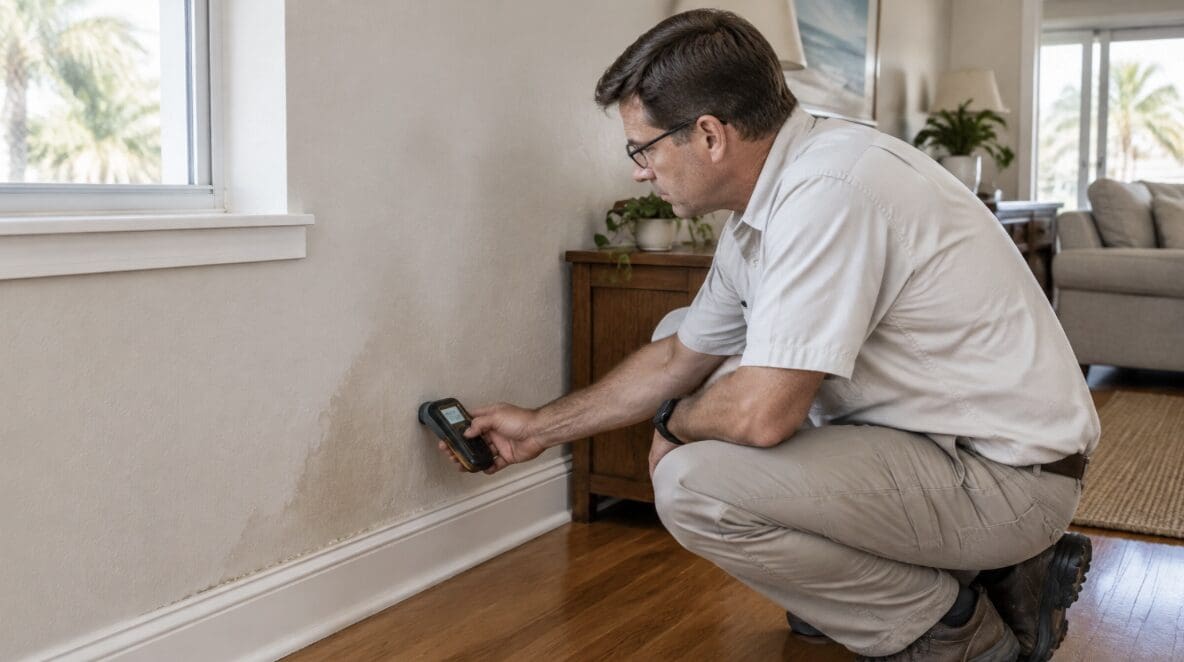

If you smell something musty, have had a leak or flood, or suspect growth behind a wall, a professional mold assessment can help identify what’s happening and what to do next. But not every concern calls for laboratory testing: when mold is already visible, the priority is usually correcting the moisture and addressing the affected material, not paying for a sample that won’t change the plan.
In Southwest Florida, humidity and storm-related water intrusion can make it difficult to tell whether a home needs testing, remediation, or simply better moisture control. Here are five situations that warrant a closer look, what an assessment involves, and when you may be able to skip sampling.
When Mold Testing Services Florida Homeowners Need Are Worthwhile
Mold testing usually means collecting air, surface, or material samples for laboratory analysis. A mold assessment is broader: it investigates moisture, visible conditions, and potential affected areas, and determines whether sampling would answer a useful question.
That distinction matters. A mold test is not automatically a remediation plan, and a lab result alone cannot establish that a home is safe or unsafe. The EPA notes that there are no federal standards for acceptable mold levels in indoor air; sampling is most useful when it is carefully planned to address a specific concern.
1. A musty odor persists, but you can’t see mold
A lingering earthy or musty smell can be a clue that moisture or mold may be present in an area you can’t see. Check for dampness or staining near plumbing, under sinks, around windows, beside the air handler, and along baseboards.
Don’t cut into a wall or pull up flooring just to investigate. A professional can inspect the area and use moisture meters or other tools to help locate damp materials. Sampling may be appropriate if it can help answer a specific question about a hidden source or compare conditions between areas.

2. Your home recently had water damage or flooding
A roof leak, burst pipe, appliance overflow, or storm-related flooding can leave water inside walls, flooring, insulation, and cabinets. Materials that stay wet are at greater risk of mold growth. Time is of the essence: address the water source and start safe drying promptly.
Testing may be worth discussing when water entered concealed spaces, moisture readings remain elevated, a musty odor develops, or the affected area is unclear. If you can see mold already, sampling may not be necessary to confirm that action is needed. Focus first on stopping the leak and getting a professional assessment of the damage.
3. You’re buying or selling a home
A home inspection can identify visible concerns, but it may not include mold sampling or a detailed moisture investigation. If there’s a history of flooding, roof or plumbing leaks, lingering odors, or signs of past repairs, a targeted assessment can provide useful documentation before a transaction.
Before ordering a test, clarify what you need to learn. Is the concern a specific room, a previous water event, or a suspected hidden area? A clear question helps the assessor determine whether sampling is appropriate and how results should be interpreted.
4. You notice recurring allergy or respiratory symptoms indoors
If you or a family member experiences recurring irritation, coughing, wheezing, or asthma symptoms at home, note when symptoms occur and whether they improve away from the property. These symptoms can have many causes and do not, by themselves, prove mold exposure. Speak with a healthcare professional about health concerns, and investigate any building moisture issues separately.
An assessment can look for dampness, visible growth, or other conditions that could contribute to an indoor air concern. Avoid relying on a single air sample to diagnose a medical problem or declare a home “safe.” Testing is most useful when it helps answer a defined building-related question.
5. You need to investigate hidden growth or verify completed cleanup
Water stains, bubbling paint, soft drywall, or persistent odors may point to moisture behind walls or above ceilings. A professional may recommend additional inspection or sampling if the initial findings indicate a concealed area that needs investigation.
After remediation, verification can help document whether the work addressed the identified problem. Florida rules restrict a mold assessor from assessing a structure that the assessor or their company remediated within the previous 12 months, and vice versa. Ask whether post-remediation assessment should be performed by an independent, appropriately licensed assessor. You can check Florida licensing information through the Department of Business and Professional Regulation.

What Does a Professional Mold Assessment Involve?
A careful assessment may include several steps. The exact scope depends on the property and the concern:
- Discuss the history. You’ll share information about leaks, flooding, past repairs, odors, or recurring symptoms.
- Inspect visible areas. The assessor checks for staining, visible growth, condensation, and other signs of moisture.
- Map moisture. Moisture meters help identify damp building materials. A hygrometer measures humidity in the air. Thermal imaging may highlight temperature patterns that merit further inspection, but it does not confirm mold by itself.
- Decide whether sampling is useful. If justified, the assessor may collect air samples, surface samples, or material samples for laboratory analysis.
- Explain findings and next steps. Results should be interpreted alongside the inspection and moisture conditions, not treated as a stand-alone verdict.
This process helps distinguish between “there may be a moisture problem” and “we have enough information to define the next step.” That can prevent you from paying for unnecessary sampling or remediation.
When Can You Skip Mold Sampling?
If mold is clearly visible, sampling is often unnecessary to establish that cleanup and moisture correction are needed. The EPA’s guidance on mold testing and sampling explains that sampling is not always necessary and should be performed by professionals who can interpret results in context.
You may also be able to skip sampling when the concern is minor, the source is known, and a qualified professional can inspect and address the issue without lab results. But don’t ignore recurring moisture, hidden water damage, or a persistent odor just because no mold is visible. Ask what decision a proposed test will help you make, and what you would do differently based on the result.
Choosing Mold Testing Services Florida Homeowners Can Rely On
When you’re comparing mold testing services Florida homeowners should look for a clear explanation of the scope, sampling rationale, and qualifications of the individual performing the work. Florida licenses mold assessors and remediators individually, so ask about the professional’s license and verify it through DBPR.
Sunset Home Specialists is a family-owned restoration company serving Southwest Florida since 1986. Our team is IICRC-certified and NORMI Sanitization-certified, and we provide 24/7 emergency restoration services. Assessment and remediation are different services; if sampling or independent clearance is appropriate, ask who will perform it and how independence requirements apply.
If water damage is involved, Sunset Home Specialists can help manage the restoration process, including the insurance claim process and direct billing to insurance companies. Coverage varies by policy, so document the damage and speak with your insurer.
We serve Port Charlotte, Punta Gorda, North Port, Venice, Englewood, Sarasota, Arcadia, Fort Myers, Cape Coral, Naples, Charlotte County, Lee County, and Sarasota County.
Frequently Asked Questions- Mold Testing Services
Does every musty smell mean there is mold?
No. A musty odor can indicate moisture or mold, but other sources are possible. If the smell persists, have the area and moisture conditions investigated.
Is mold testing necessary if I can already see mold?
Often, no. Visible mold is already a reason to address the moisture source and affected material. Sampling makes sense when it can answer a specific unresolved question.
Can an air test prove my home is safe?
No single air sample can guarantee that a home is safe. Results are a snapshot and need to be interpreted with the inspection, moisture conditions, and the reason for testing.
Should I get mold testing services after remediation?
It depends on the project and the assessment plan. Ask whether independent post-remediation verification is appropriate, and confirm that the assessor meets Florida licensing requirements.
Get Clear Guidance on Suspected Mold
Finding a musty smell or signs of water damage can be unsettling, but you don’t have to guess what comes next. For mold concerns or urgent water intrusion, call Sunset Home Specialists 24/7 at (941) 276-4667 or (941) 258-8495. Learn more about our mold remediation services, read Is There Mold in My House?, or contact our team to discuss your situation.
